
Technical Study: Detailing Zinc and Sheet Metal Cladding
Zinc and other sheet metals such as aluminium and copper are a versatile cladding material. They can be used at nearly all angles and their most common form of installation on residential projects is standing seam on a plywood substrate. This allows the designer to be creative with shapes and produce interesting faceted roofs and walls.
[To Download a FREE PDF of this guide scroll to the end]


Details are not the details. They make the design. – Charles Eames
All sheet metal materials are a great option when transitioning between roofs and external walls as they can be used as both roofing and façade cladding material. Zinc, for example, is used widely throughout Paris’ Haussmannian mansard roofs.
When designing a zinc or sheet metal roof or wall, it is important to contact the manufacturer or supplier at the earliest date possible. They will be able to advise on which recommended build-up to use in accordance with the size of the building, use, location, use as a façade material or roofing only, etc.

Standing Seam Materials
Zinc
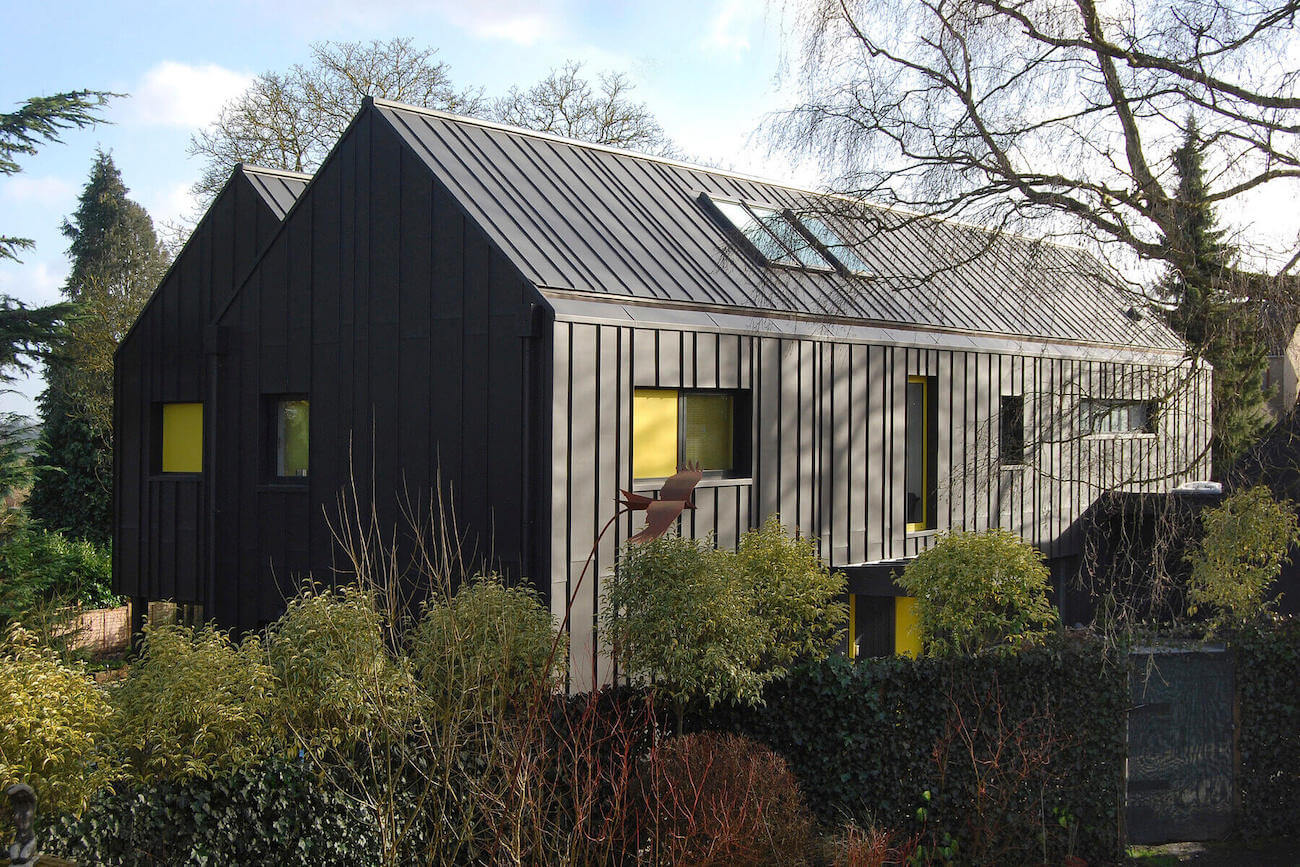
Zinc is a fairly common roofing material as it is naturally resistant to corrosion and is therefore long lasting. Even if the cladding gets scratched, the surface will heal itself and blend with the existing zinc. Some people prefer to specify pre-weathered zinc so that all the surfaces will have the same matt grey finish from the start. Natural zinc however, will take around 10 years for the matt grey patina to appear. The zinc will start with a shiny metallic appearance, and depending on the location and exposure, will weather at different speeds.
There are large range of other finishing options, some giving the appearance of other metals such as aluminium and copper or colours to match solar panels and surrounding building materials. These are produced by adding a special pigment layer to the zinc creating a tonal effect rather than a block colour. However, these finishes are not scratch resistant and are not recommended in highly exposed coastal areas.
Zinc normally comes in sheet rolls and can be installed or preformed in lots of different ways including standing seam vertical and horizontal, flat lock panels, interlocking panels, overlapping panels and tiles.
There are a large range of finishes including those that imitate other metals such as copper, although the standard pre-weathered or raw zinc are the most common. Zinc roofs can however have a relatively expensive upfront cost as the installation must be completed by an approved installer.


Copper


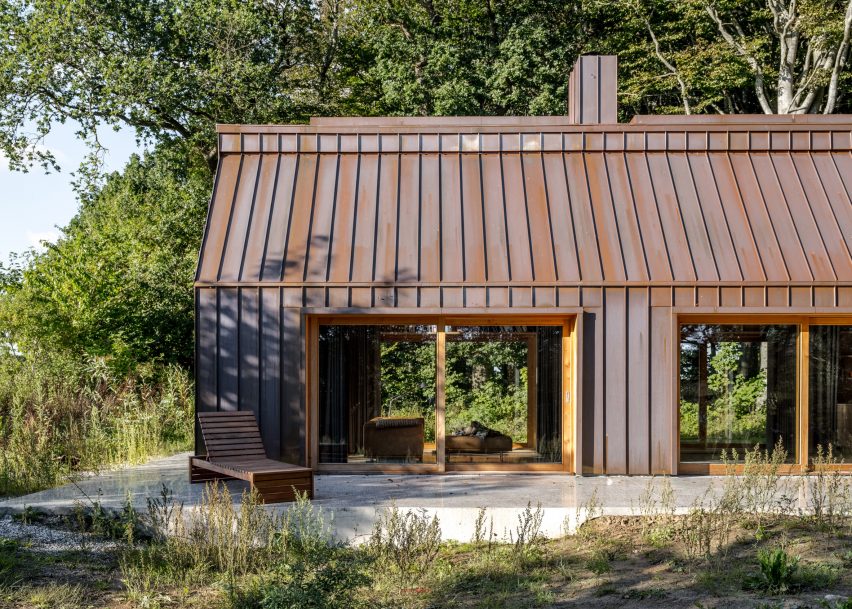
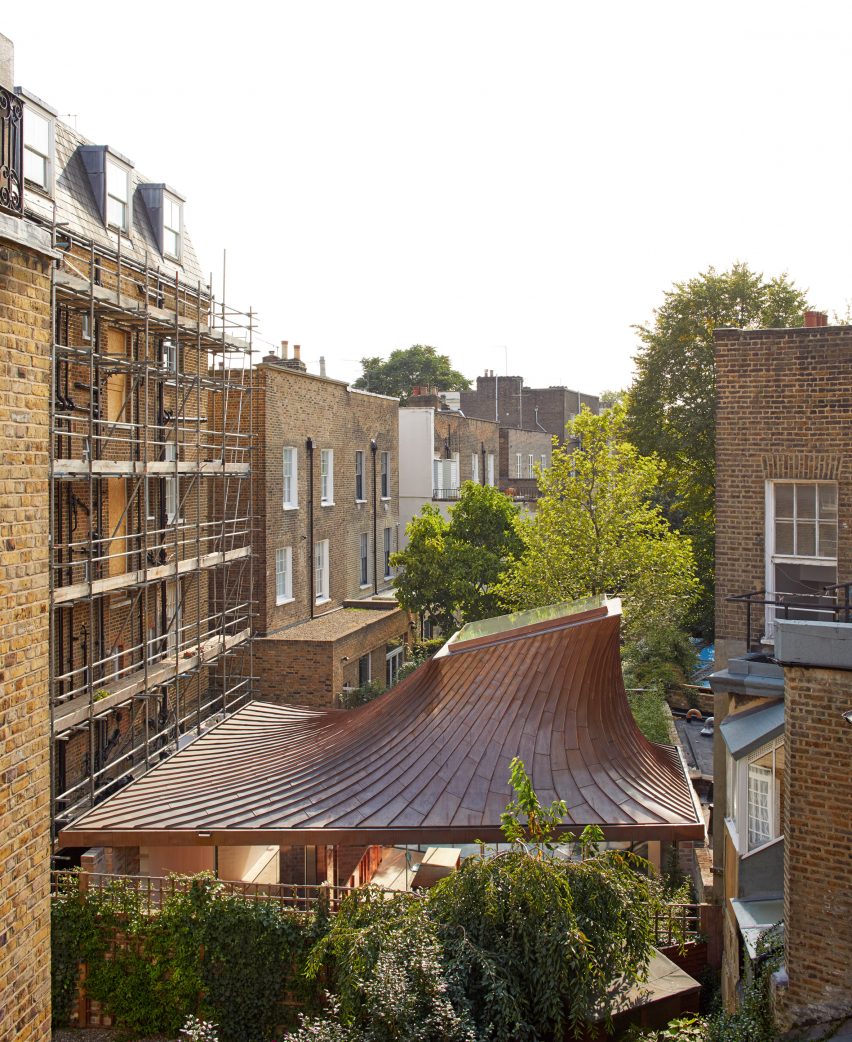
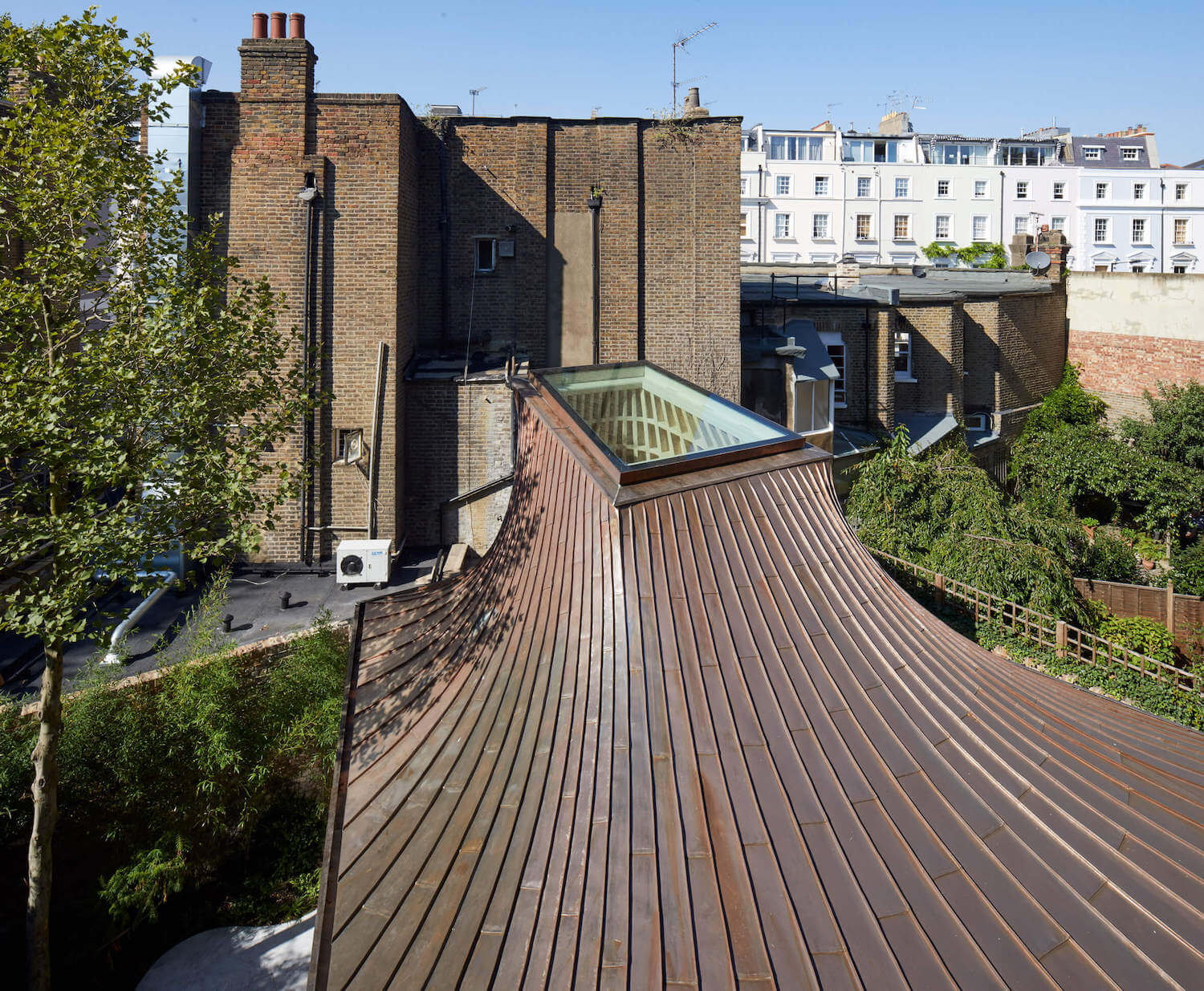
Copper is a popular choice for both roofing and facades due to its eye catching colours. Whilst the green patina is very common in historic clad buildings, copper can now be installed with a number of finishes. The raw copper is still very common as well as the pre-weathered option which comes installed with the green patina as new. Many prefer the natural colour of the copper cladding and go for a pre-oxidised option which only turns green in areas exposed to more rain and air such as the roof. If you want to maintain the initial copper colour, it can be mixed with other metals as an alloy so that the original copper colour is not lost through time.
Copper-aluminium alloy and brass options are also available for a gold or yellowy brass colour finishes.
Aluminium
Aluminium has the highest strength to weight ratio of any metal and is therefore an incredibly strong material. However, it can be very expensive for use in standing seam sheet installation and is therefore more commonly seen as corrugated façade or roofing panels. Some panels are even manufactured with insulation to create easy to install roofing sections. Although all sheet metals can be easily recycled, aluminium is an infinitely recyclable metal, although this can be difficult if adhered to another material such as the insulation. It is also a popular option for rainwater goods, flashing and sills as it can be powder coated in any colour to match or contrast with building materials or openings.
Stainless and panted galvanised steel
Stainless steel and painted galvanised steel standing seam options also exist, but these tend to be used within more industrial settings and as pre-fabricated panels.
Facade
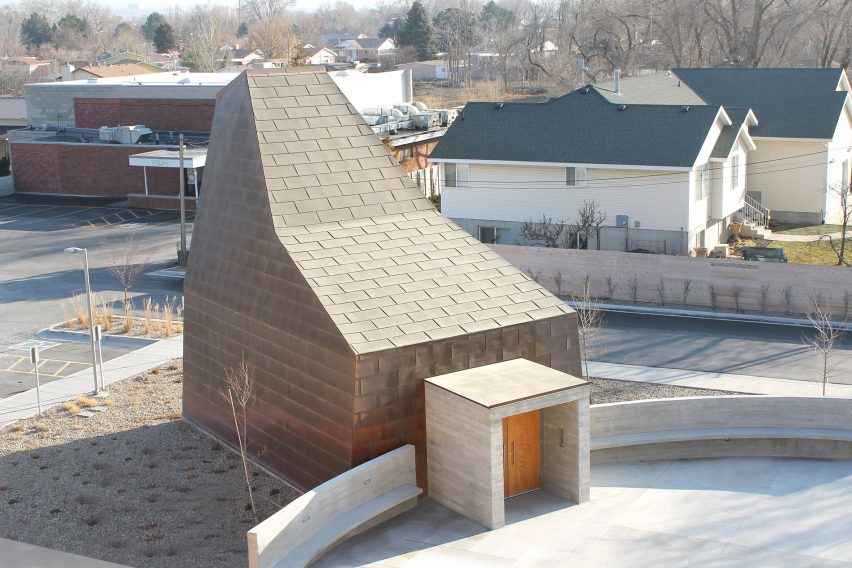
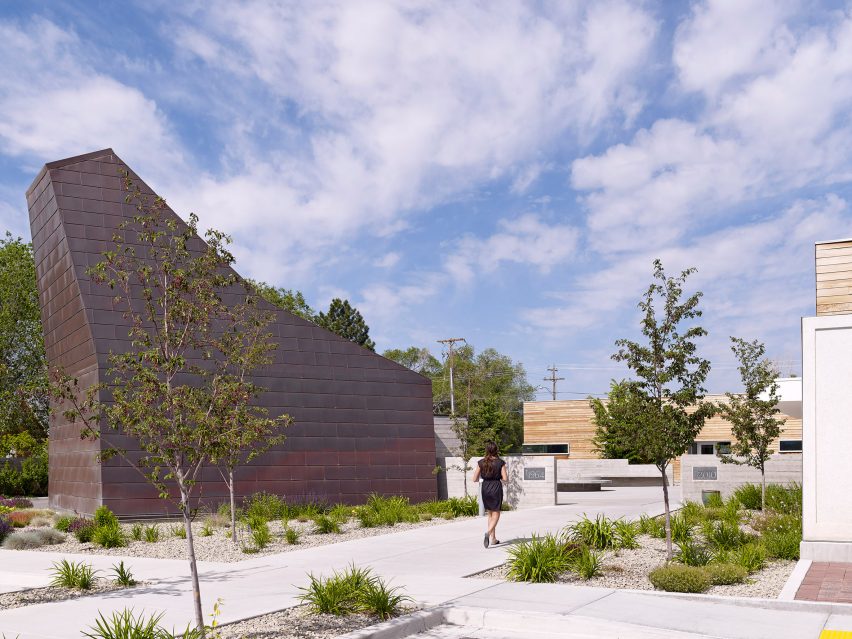
Whilst a warm wall is possible, most manufacturers and organisations such as the NHBC recommend a vented cold wall construction for facades, especially in a residential setting. If you are using standing seam for walls and roof it is recommended to use a vented plywood build-up for the walls and roof to maintain a similar build-up throughout. Insulated wall panels can be used but are more typical in industrial construction settings.


As well as standing seam, there are a number of other rainscreen style façade options including:
- Composite cassettes
- Interlocking panels
- Overlapping wall panels

Roofing
There are a huge range of options when it comes to sheet materials and roofing. The most common of these is standing seam but we will also explore other warm roof options.
Standing Seam – Cold roof on vented plywood
One of the most popular forms of installing zinc is on a vented plywood base. As mentioned previously, this option can be used both for walls and roofing and is a great cost effective option for small residential projects. It can be installed both vertically and horizontal and the detailing does vary for each option.

Timber boarding – Cold construction on vented timber boarding
Zinc on timber boarding is a traditional installation method and therefore still used in restoration projects or when working with older buildings that may already have timber boarding installed under the roofing material.
There are a number of warm roof constructions possible with zinc although many of these options will only be cost effective on larger projects and require the provision that the build-up is 100% vapour resistant. It is also important to consider the fire requirements of the building and fire class of the insulation used. Below is a short summary for each and when their use is recommended.
Structural roof – Warm construction
This method involves installing the sheet metal over a rigid insulation using special fixing clips and screws supplied by the manufacturer. To avoid corrosion from any condensation between the metal and insulation, a protective layer of metal is added. This increases the cost of the sheet metal material. A manufacturer’ recommended membrane may also be required between the sheet metal and insulation.
Insulated metal panel – Warm construction
Some manufacturers offer prefabricated roofing panels where the metal, insulation and vapour barrier have been mechanically adhered to prevent thermal bridging, condensation and corrosion to the underside of the metal. A facing sheet metal such as zinc can then be added to the surface making sure the correct membrane is used between the two. As with the structural roof, a protective layer on the underside of the zinc is also required.
Metdeck – Warm construction
This system involves the installation of zinc over a pre-fabricated roofing panel. This panel is made up of a 18mm WBP exterior grade plywood substrate which is bonded to phenolic foam and has a continuous aluminium foil backed bituminous self-sealing vapour barrier on the underside. This plywood allows for greater flexibility and eliminates the need to penetrate the insulation layer with fixings, however as with the previous warm roof options, a protective layer to the underside of the zinc is required.
Compact Roof – Warm construction on cellular glass insulation
For roofs installed over any building with a high vapour content such as swimming pools or saunas, a high tech option exists which prevents any vapour reaching the underside of the metal cladding.
The sheet metal is usually fixed to Foamglas or cellular glass insulation with a polyethylene film and bitumous membrane. This system does not require mechanical fixings that penetrate the insulation, reducing thermal bridges.
Things to consider when detailing standing seam zinc
Setting Out


When designing for standing seam it is really important to consider the panel width setting out in accordance with your openings and corners of you building. A typical standing seam panel is 430mm from seam to seam due to the thickness of the rolled metal minus the standing seam fold, although this can be made thinner if the sheet metal is trimmed. Some designers will choose irregular panel widths to break up a façade. This width may also dictate where openings are located so that windows and doors either align with the seams or are purposefully offset so that the seams never align with junctions.
Edges of the panel


When detailing vertical and horizontal standing seam zinc, there are a huge range of corner options to choose from. An important consideration when picking the corner design is the proximity to people passing. For areas with high human traffic, a folded option might be chosen. For areas that are not accessible, a projected option might be chosen to define the edge of the building.
Integration of rainwater goods
Zinc is a great material to allow for integration of gutters, downpipes and other features such as sills and reveals. There are a number of recommended box, hidden and valley gutter details which can be integrated into any project as well as snow guards for roofs in areas with high snowfall. Along with standard rainwater goods, there are also many preformed elements to decorate a building.



For More Inspiration…
For More Inspiration…
Resources
If you want more inspiration on sheet metal cladding, roofs, detailing and precedents be sure to follow Detail Library on Pinterest where we have lots of façade and roof options.
Download the Guide
Want to keep this for later? Enter your email below to get instant access to this free download — plus other helpful resources, guides, and updates from the Detail Library to support your projects and professional development.
This form collects information that we will use to send you useful updates from the Detail Library. No spam, no funny business! We will not share or sell your personal information. You can unsubscribe at any time.

Download the Details
Many of the details featured here can be downloaded from the Detail Library. For more information on how to detail zinc and other sheet metal walls and roofs check out the fully resolved zinc details via the link below. They are available to all members, or can be purchased individually.
Other Resources
There are plenty of further resources to help in detailing zinc and other sheet metal materials.
https://www.vmzinc.co.uk/technical-drawings.html
https://www.sigzincandcopper.co.uk/
https://elzinc.es/en/architects-promoters/services-tools-downloads/elzinc-architectural-details/

Author
Written by Aida Rodriguez-Vega, BA(Hons) MArch DipArch ARB, architect and researcher. At the Detail Library, Aida keeps busy by carrying out technical research and drawing new details for the ever-growing library.
Image Credits
Feature image:
Authors House
Architect credit: Sleth Architects
Photographer credit: Rasmus Hjortshøj – COAST
Zinc Cladding
Godson Street
Architect credit: Edgley Design
Photographer credit: Jack Hobhouse
Copper Cladding
Feature image: Authors House
Architect credit: Sleth Architects
Photographer credit: Rasmus Hjortshøj – COAST
Chapel of the Mines
Architect credit: Sparano + Mooney Architecture
Photographer credit: Jeremy Bittermann
Other Feature Gallery
Merrowdown
Architect credit: Stephen Davy Peter Smith Architects
Photographer credit: Lyndon Douglas
House in a Garden
Architect credit: Gianni Botsford Architects
Photographer credit: Edmund Sumner
