November 2026 – Eco-Habitats: Integrating Biodiversity into Building Details
The UK is one of the most nature-depleted countries on earth, and buildings are a significant part of the problem. Swift populations have fallen by over 60% since 1995. House sparrow numbers have halved. Hedgehogs have declined by roughly a third in the last decade alone. These are species that evolved alongside our buildings and settlements, and as we have improved our buildings, sealing eaves, filling cavities, and replacing open soffits with tight dry verge systems, we have removed the habitat they depended on without replacing it.
The good news is that the solution is straightforward: dedicated, sealed habitat features designed into the building from the outset, specified on the working drawings, in the right location, at the right height, with the right orientation. A wildlife feature installed in the wrong place is not biodiversity provision, it is a wasted specification.
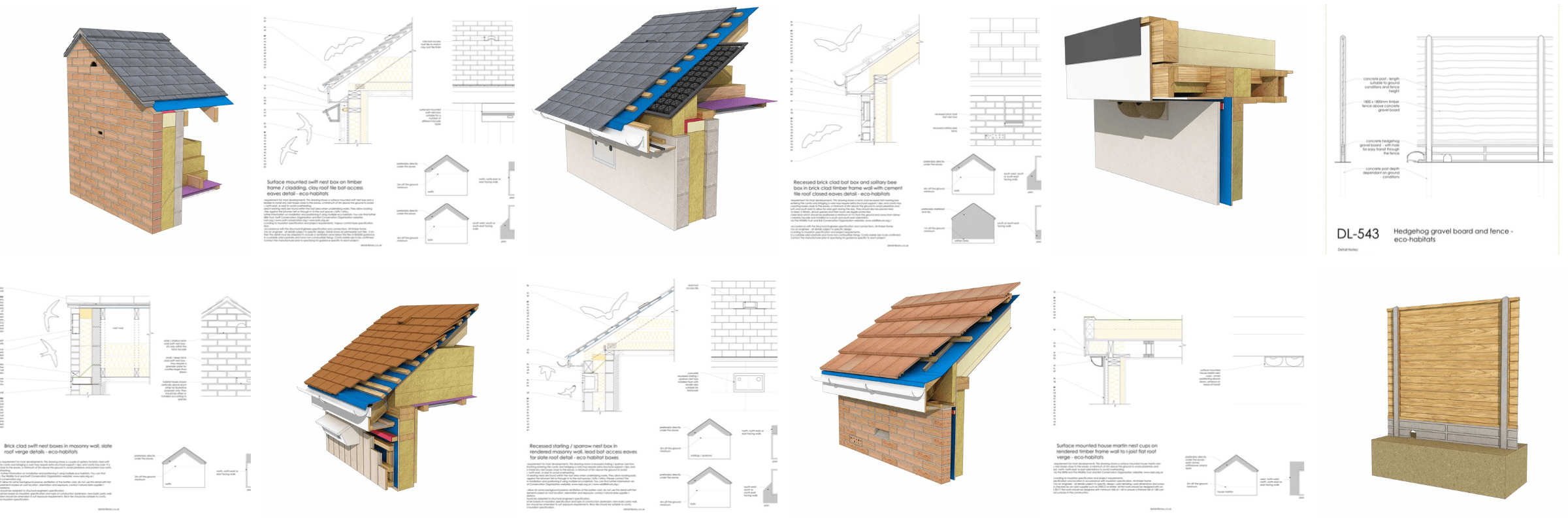
This new set of details covers seven of the most commonly specified eco-habitat types, showing how each can be incorporated into typical construction details across a range of wall and roof build-ups. The set covers swift boxes, bat access tiles, starling and sparrow nest boxes, house martin nest cups, bat roosting boxes, solitary bee bricks, and hedgehog gravel boards — across masonry cavity walls, timber frame, and render-clad construction, with pitched roof, flat roof, and boundary fence contexts.
Each detail includes guidance on positioning height, orientation, and species-specific requirements, as well as notes on structural support, DPC, and cavity tray requirements where a habitat box bridges the cavity.
All bat species and their roosts are legally protected in Britain, and hedgehogs are also legally protected. Where existing roosts may be present, a bat survey should be undertaken before works begin.
We’ve really enjoyed putting this set together, we hope it makes it a little easier to consider wildlife in your next project and to put the details to good use.
Details included in this set:
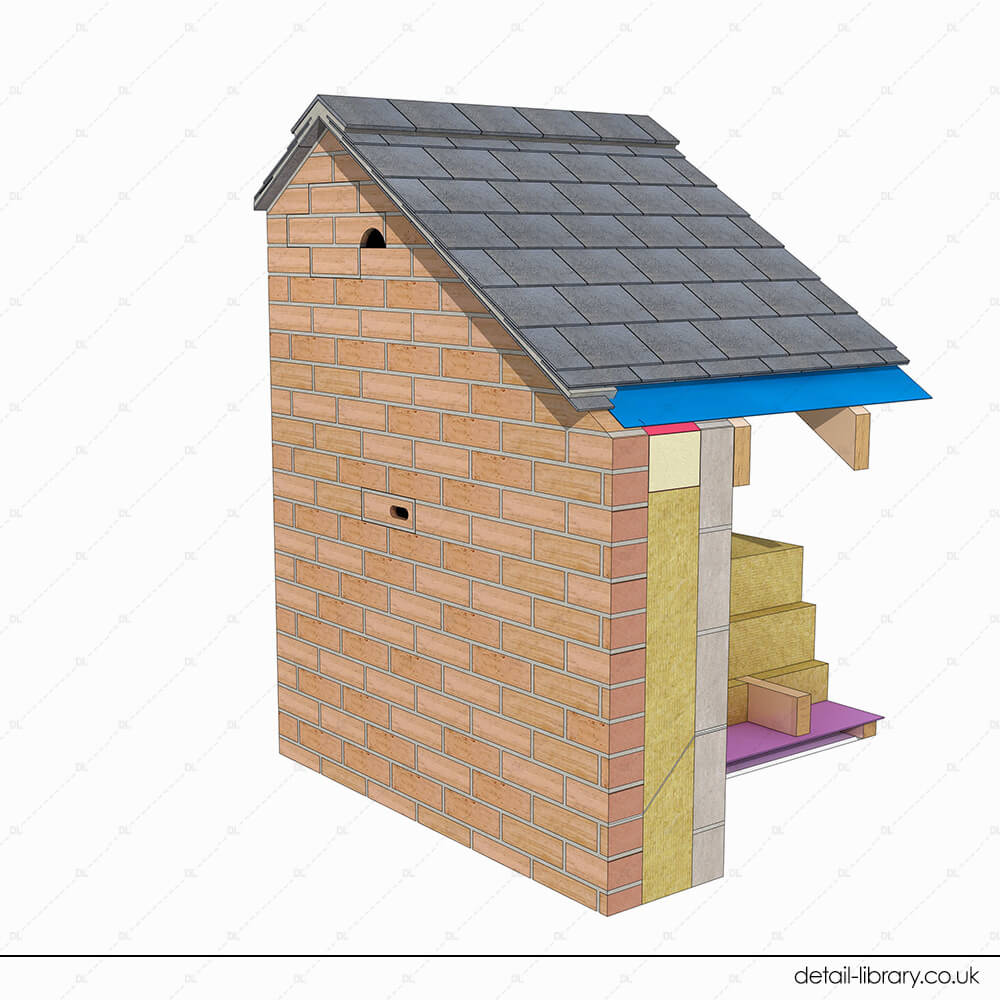
- Brick clad swift nest boxes in masonry wall, slate roof verge details
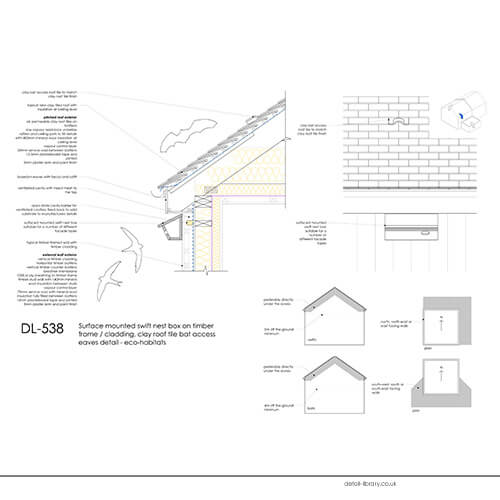
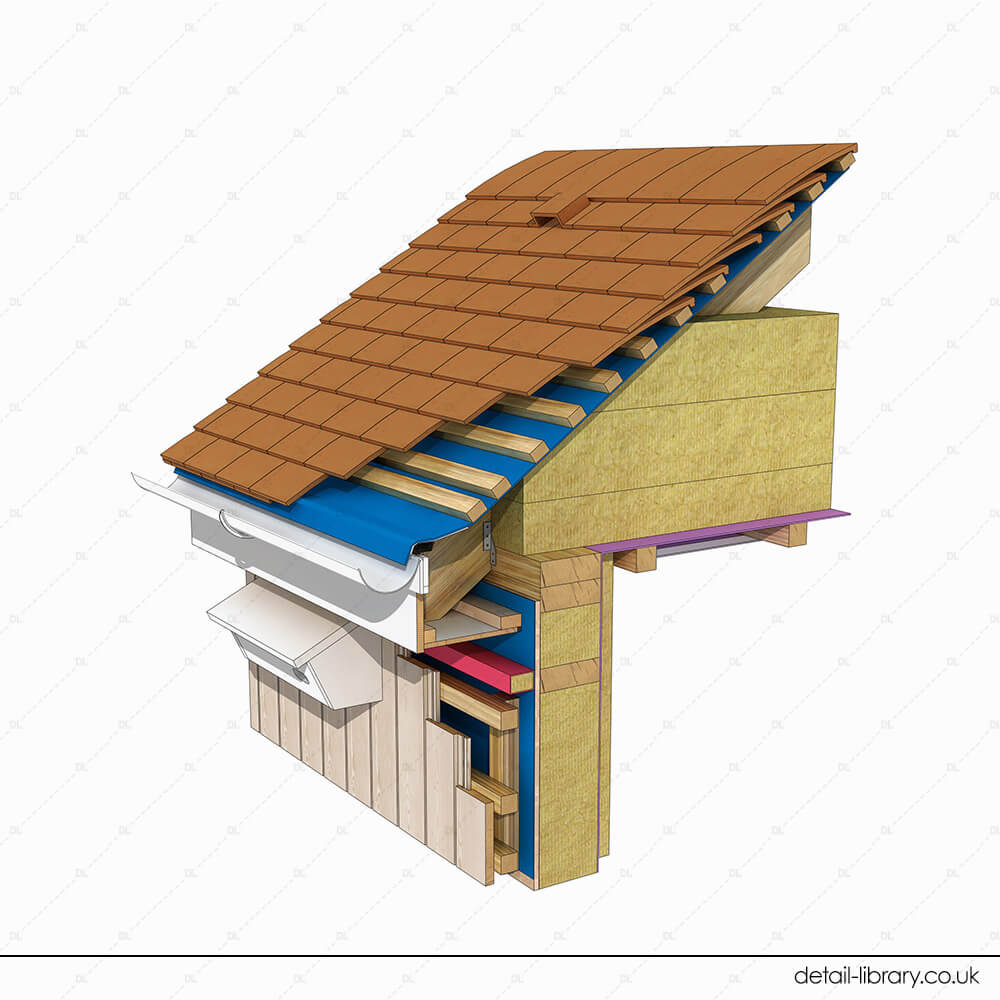
- Surface mounted swift nest box on timber frame / cladding, clay roof tile bat access eaves detail
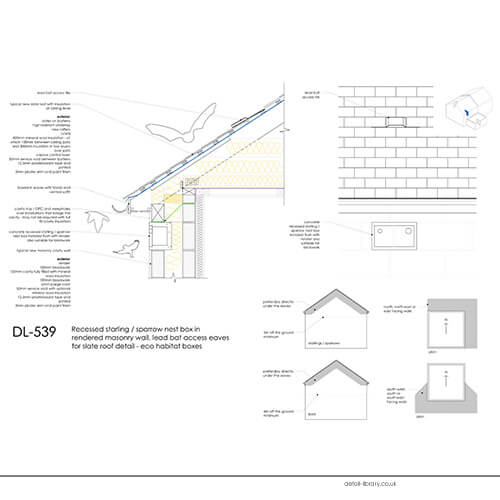
- Recessed starling / sparrow nest box in rendered masonry wall, lead bat access eaves for slate roof detail
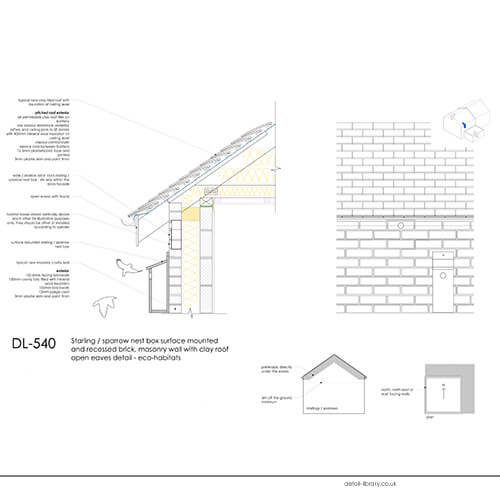
- Starling / sparrow nest box surface mounted and recessed brick, masonry wall with clay roof open eaves detail
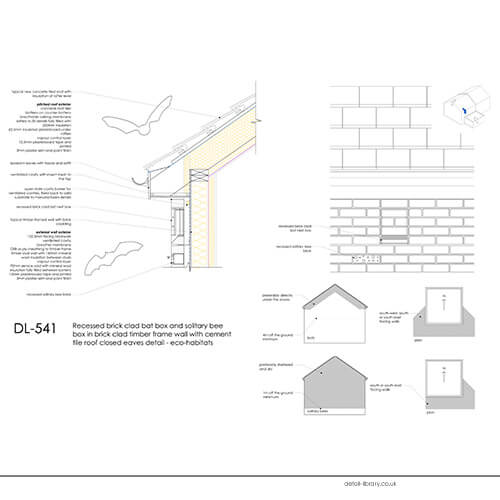
- Recessed brick clad bat box and solitary bee box in brick clad timber frame wall with cement tile roof closed eaves detail
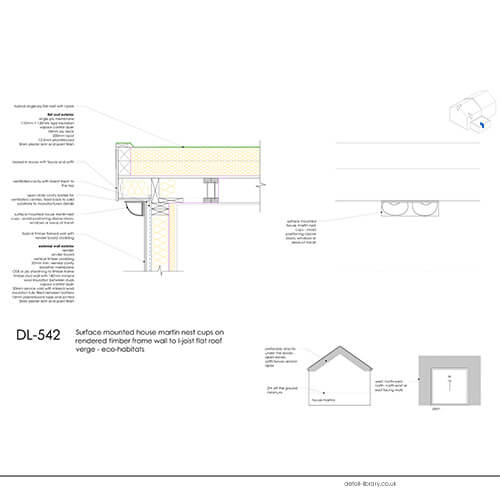
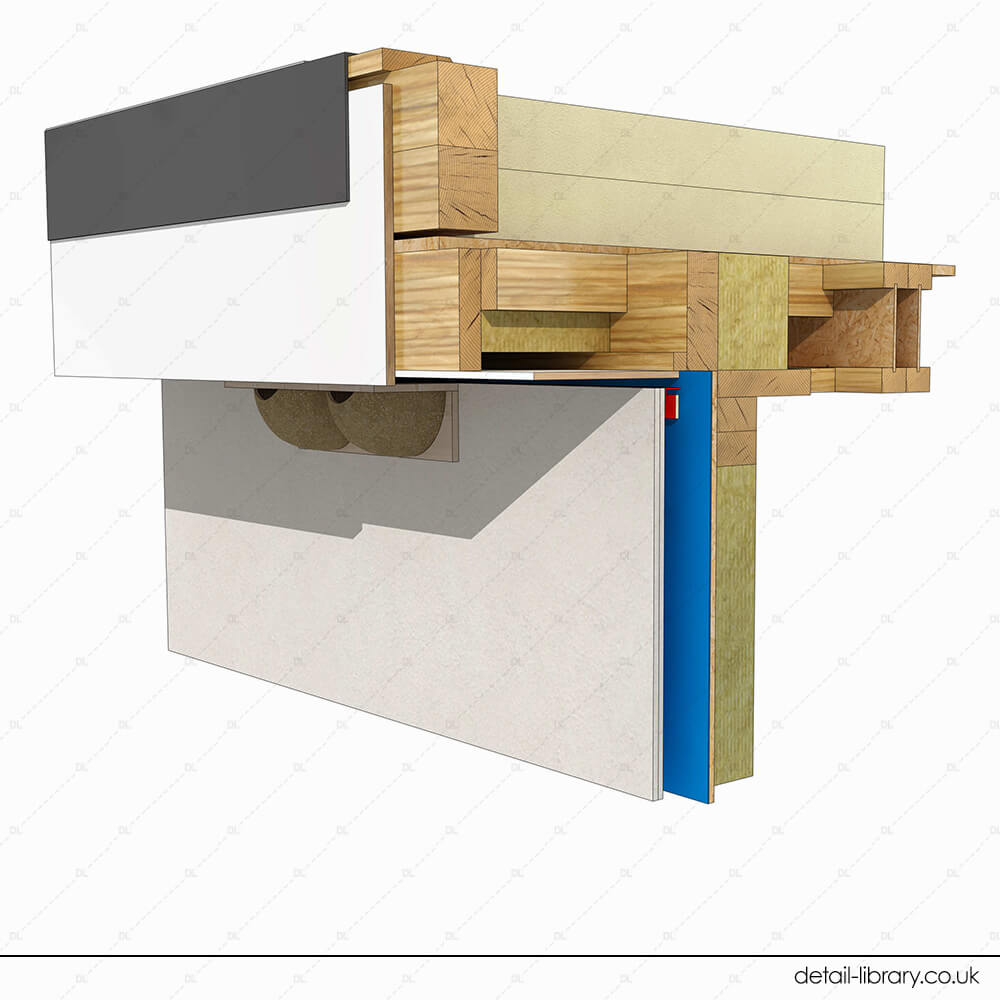
- Surface mounted house martin nest cups on rendered timber frame wall to I-joist flat roof verge
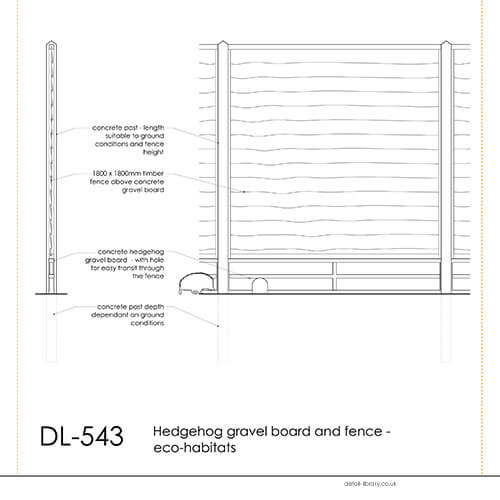
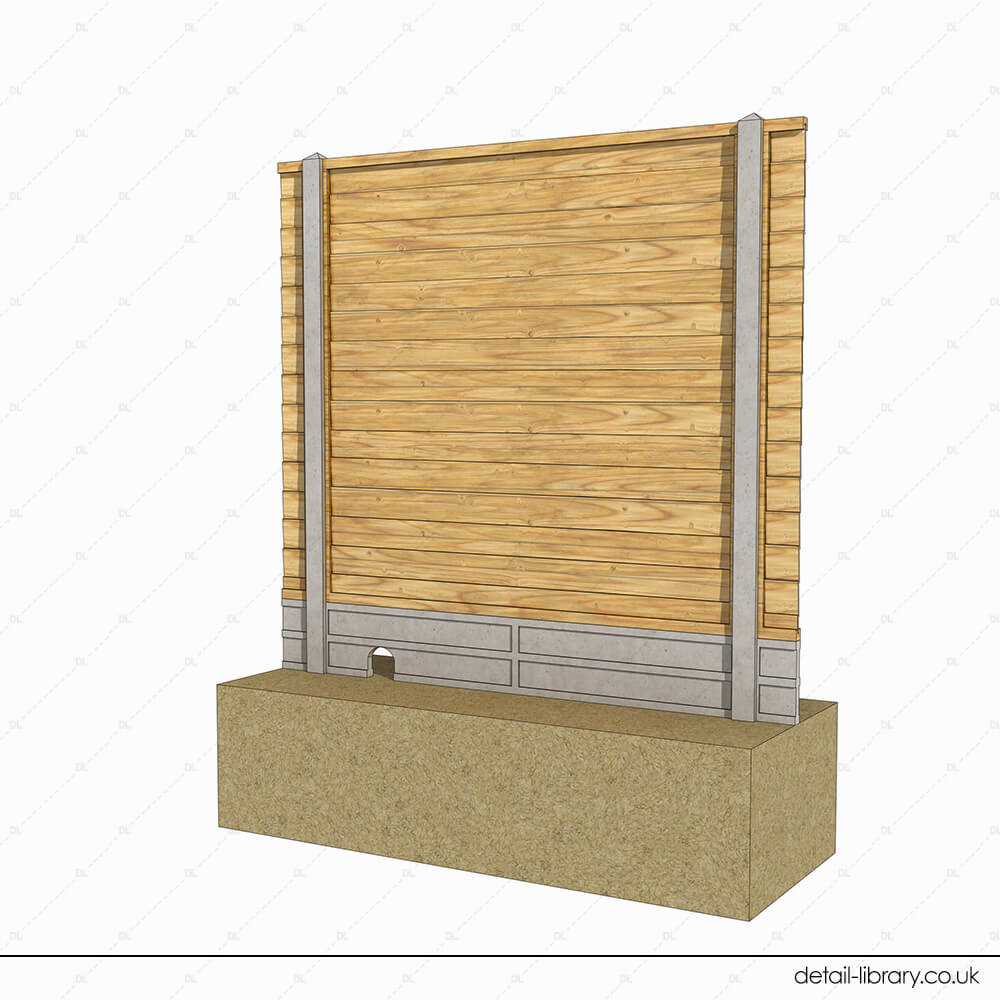
- Hedgehog gravel board and fence
New Details
DL537 – Brick Clad Swift Nest Boxes in Masonry Wall, Slate Roof Verge Details
DL538 – Surface Mounted Swift Nest Box on Timber Frame, Clay Roof Tile Bat Access Eaves Detail
DL539 – Recessed Starling / Sparrow Nest Box In Rendered Masonry Wall, Lead Bat Access Eaves for Slate Roof Detail
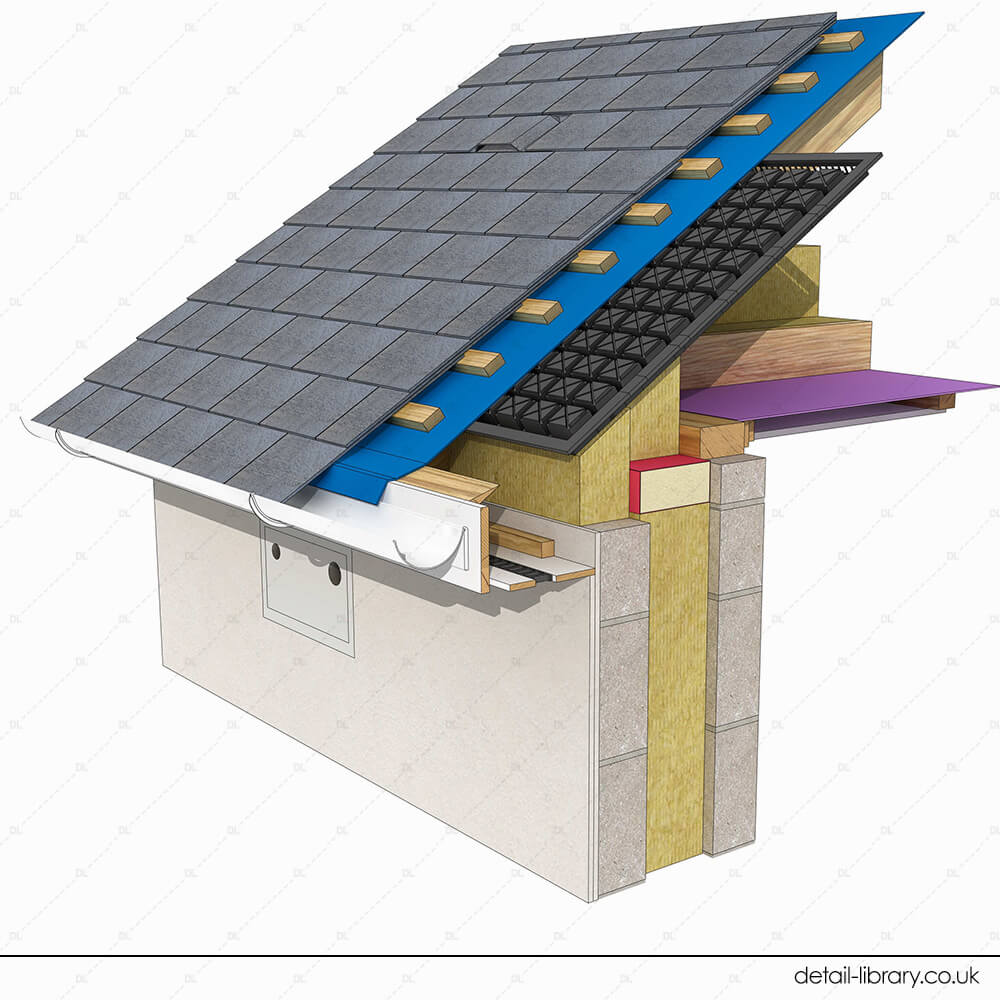
DL540 – Starling / Sparrow Nest Box Surface Mounted and Recessed, Masonry Wall With Clay Roof Open Eaves Detail
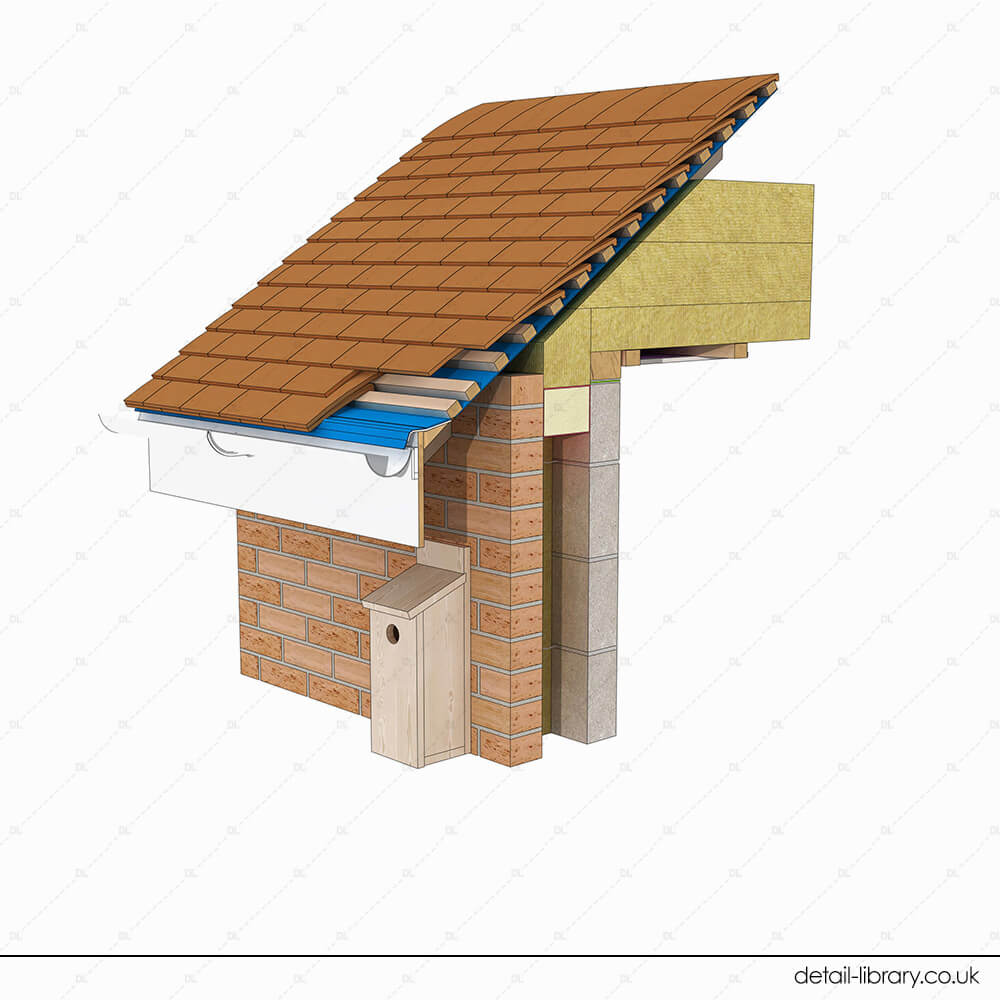
DL541 – Recessed Bat Box and Solitary Bee Box in Timber Frame Wall With Tile Roof Closed Eaves Detail
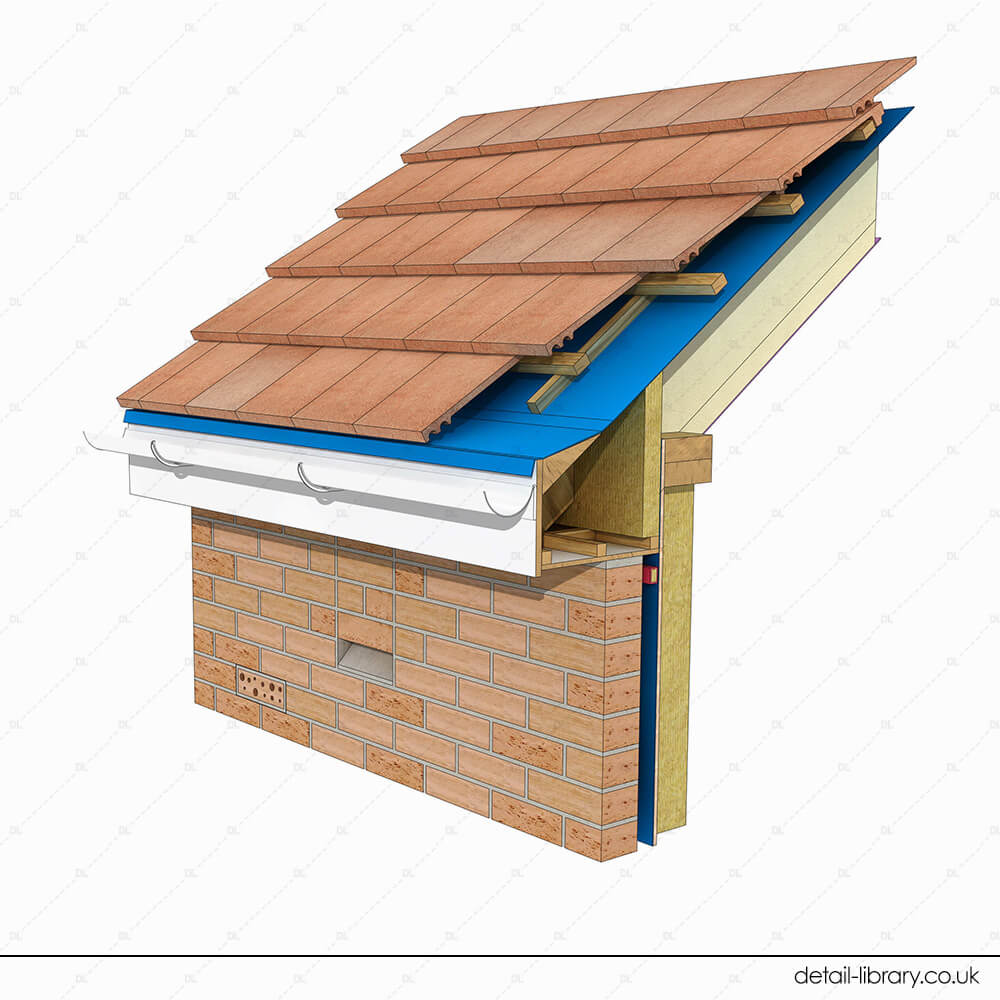
DL542 – Surface Mounted House Martin Nest Cups on Rendered Timber Frame Wall to I-Joist Flat Roof Verge
DL543 – Hedgehog Gravel Board and Fence